

Trim, Molding & Architectural Carpentry in New Jersey
The beauty of a home’s interior lies in details that often go unnoticed at first glance but establish the overall atmosphere of quality. Crown molding that softens a ceiling line, baseboards that finish a floor and wainscoting that adds depth to a dining room are what make a house feel custom rather than builder-grade. At Joe’s Construction & Remodeling, LLC, we provide trim and molding installation in New Jersey for homeowners across Morris County and Northern NJ. Custom carpentry adds character and an upscale feel to traditional and modern homes alike, and our fine trim work is built on precision, clean joints and careful finishing. We are fully insured and offer free estimates.
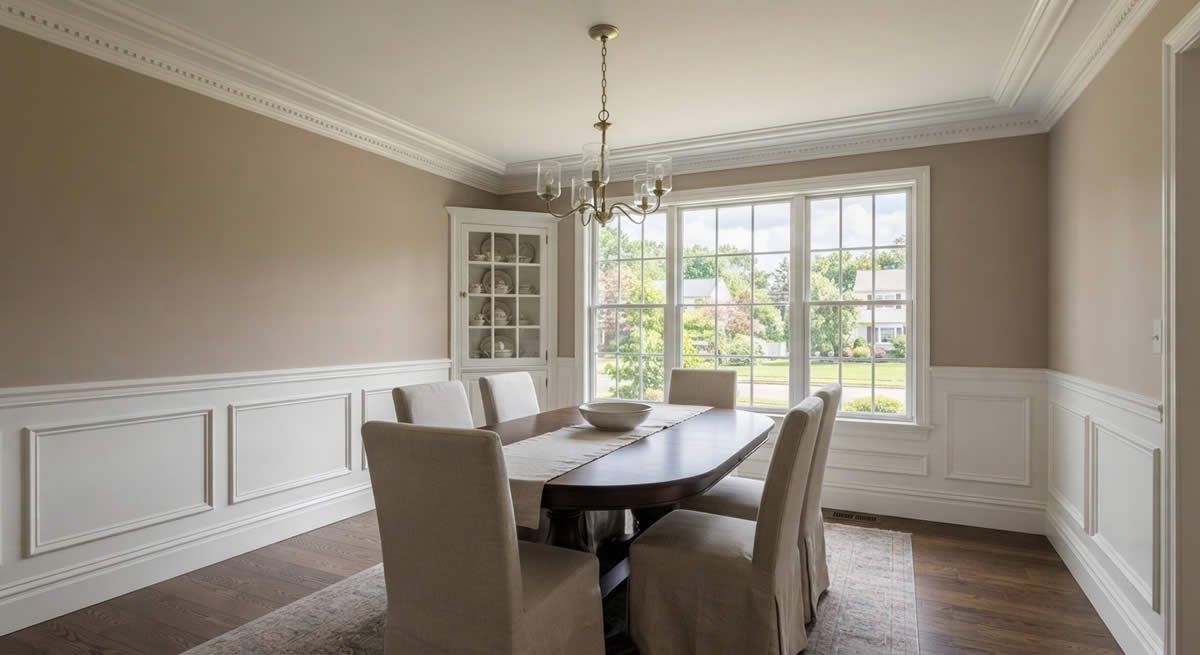
Custom crown molding and wainscoting finished in a Morris County, NJ home.
This guide covers the architectural elements we install, how to choose profiles and materials, how trim fits into remodeling projects and what separates professional carpentry from a rushed job.
Our Trim, Molding and Carpentry Services
We specialize in installing architectural elements that define spaces and bring out the best in your rooms:
- Crown molding: softens the transition between walls and ceilings with elegant profiles.
- Baseboards: protect walls at the floor line and provide a clean, finished edge.
- Chair rails: add structural lines and visual boundaries while protecting walls from chair backs.
- Wainscoting: panels, board and batten and other styles that bring texture and depth to dining rooms, hallways and entryways.
- Accent walls: shiplap, paneling, picture frame molding and feature walls for living rooms, bedrooms and offices.
- Window and door casings: trim that frames openings and gives them presence.
- Built-ins and custom details: shelving, mantels and other custom carpentry that make a room unique.
Crown Molding: Finishing Touches That Make a Room Feel Complete
Crown molding is one of the most recognizable upgrades in interior carpentry. It draws the eye upward, hides imperfect wall-to-ceiling joints and adds a sense of height and formality. Profiles range from simple, clean lines suited to modern homes to ornate, layered designs for traditional spaces. Crown can also be built up in multiple pieces for a bigger, more dramatic presence.
Installing crown molding is more difficult than it looks. Walls are rarely perfectly square, ceilings are not always level and inside and outside corners must be cut at precise compound angles. Professional installers account for these variations with coped joints, careful scribing and filling so seams are tight and the finished molding looks seamless.
Baseboards and Chair Rails: Function Meets Style
Baseboards protect walls from scuffs, vacuums and furniture while covering the gap between flooring and drywall. Taller baseboards create a more substantial, upscale look, and the profile you choose should coordinate with your window and door casings and the style of your home. If you are replacing floors, it is smart to plan baseboards together with your hardwood flooring installation so the transitions and expansion gaps are finished neatly.
Chair rails sit at roughly the height of chair backs and divide the wall into zones. They are traditionally used in dining rooms and hallways, and they pair well with paint, wallpaper or paneling below the rail for a layered look.
Wainscoting and Accent Walls: Texture and Depth
Wainscoting is wall paneling applied to the lower portion of a wall and it has been used for centuries to protect and decorate. Popular styles include:
- Raised or flat panel wainscoting: formal, traditional and well suited to dining rooms and entries.
- Board and batten: clean vertical lines that fit farmhouse, transitional and modern designs.
- Picture frame molding: applied rectangles that add architectural interest with relatively simple materials.
- Beadboard: a classic choice for casual spaces, mudrooms and bathrooms.
- Shiplap and paneled accent walls: bring texture and depth to bedrooms, offices and living rooms.
These details are especially effective in dining rooms, hallways and primary bedrooms, where they change the atmosphere of the entire space for a modest investment compared with a full renovation.
Choosing Trim Materials
- Solid wood: offers natural grain, can be stained or painted and is well suited to traditional and high-end projects.
- MDF (medium-density fiberboard): smooth, consistent and economical, and it takes paint very well. It is best in dry interior areas.
- Finger-jointed pine and primed wood products: a balance of cost and durability for painted trim.
- PVC and composite trim: resist moisture, so they are often used outdoors and in high-humidity locations.
- Polyurethane and plaster-style moldings: useful for ornate profiles and curved or decorative applications.
We recommend materials based on location and use. Moisture-prone spaces such as bathrooms and basements need different choices than a dry dining room.
What Separates Professional Trim Carpentry From Average Work
- Planning and layout: measuring carefully, deciding where seams fall and balancing the pattern around the room.
- Tight joints: accurate miter and cope cuts that stay closed as the house moves with the seasons.
- Proper fastening: nailing into framing and using adhesive where needed so pieces stay put.
- Scribing to imperfect walls: adjusting trim to fit wavy surfaces and uneven floors.
- Filling and caulking: nail holes, seams and gaps are finished so painted trim looks continuous.
- Coordination with other trades: trim should be installed after drywall and before final paint, and it should be sequenced with flooring.
Trim as Part of a Remodel
Trim work is the finishing layer that ties other projects together. It makes remodeled rooms feel intentional and polished.
- Kitchens: crown molding above cabinets and custom hardware give cabinetry a built-in look. See our kitchen remodeling services.
- Basements: baseboards, casings and ceiling details help a finished basement feel like part of the main home. See our basement remodeling page.
- New windows and doors: fresh casings complete the opening. See window and door replacement.
- New or repaired walls: trim is installed after drywall finishing and before painting.
- Exteriors and porches: columns, fascia and entry trim improve curb appeal. See porch and steps.
Our Trim and Molding Process
- Free consultation and estimate: we walk through your home, measure and discuss which profiles and styles suit each room.
- Style and material selection: we help coordinate heights, profiles and finishes with your architecture and décor.
- Preparation: we protect floors, remove old trim carefully when needed and mark framing locations.
- Installation: precise cutting, fitting and fastening of each piece.
- Finishing: filling, caulking and sanding so surfaces are ready for paint or stain.
- Final walkthrough: we review the work with you and confirm everything meets your expectations.
Planning Trim Work in New Jersey Homes
Older New Jersey homes, especially in historic towns like Boonton and Chatham, often have distinctive trim profiles. Matching or restoring existing details can preserve the character of the home. In newer homes, adding trim is one of the most effective ways to bring architectural interest to otherwise plain interiors.
Seasonal humidity changes can cause wood trim to expand and contract, which is why proper acclimation, fastening and caulking matter. If your home was built before 1978, trim and woodwork may contain lead-based paint, and removal or sanding should follow lead-safe practices. New Jersey requires home improvement contractors to be registered with the state, so confirm registration and insurance before hiring. We are fully insured and happy to discuss any questions.
Trim and Molding Services Across Morris County and Northern NJ
We provide trim and carpentry services in Boonton, Chatham, Chester, Denville, East Hanover, Hanover, Harding, Jefferson, Long Hill, Mendham, Mine Hill, Montville, Morris, Mount Olive, Parsippany-Troy Hills, Pequannock, Randolph, Rockaway, Roxbury and Washington Township, and in communities across Bergen and Sussex counties. View our areas we serve, or visit our Morris County, Bergen County and Sussex County pages.
Why Choose Joe’s Construction & Remodeling, LLC?
- Fully insured for your protection.
- Free, transparent estimates with no hidden fees.
- Competitive pricing and careful craftsmanship.
- All major credit cards accepted.
- Bilingual service in English and Spanish. ¡Hablamos español!
Frequently Asked Questions About Trim and Molding
Does crown molding make a room look smaller?
Not when it is proportioned correctly. Well-chosen crown can make rooms feel taller and more finished. We help select a size that suits your ceiling height.
Is MDF or wood better for baseboards?
Both can work well. MDF is smooth and economical for painted trim in dry areas, while solid wood suits stained finishes and high-end projects. We recommend based on your room and goals.
Can you match my existing trim?
Often we can come close, or we can create a coordinated look by combining stock and custom profiles. We review options on site.
Do you paint the trim after installing it?
Yes. We offer interior painting, so your trim can be installed, caulked and finished by one team.
Get Your Free Trim and Molding Estimate
Ready to add character and a custom look to your home? Contact Joe’s Construction & Remodeling, LLC at 973-876-7130 or 973-580-5598, or request your free quote online. Explore all of our home improvement services for your next project.