

Tile Flooring Installation in New Jersey: Kitchens, Bathrooms & Entryways
For high-moisture and heavy-traffic areas of your home, tile is the gold standard. It resists water, stands up to constant foot traffic and offers nearly unlimited design possibilities, from clean modern porcelain to rich natural stone. But tile is also one of the least forgiving finishes to install. Uneven floors, weak subfloors and rushed layouts show up immediately as cracked tiles, crooked grout lines and failing joints. At Joe’s Construction & Remodeling, LLC, we provide expert tile flooring installation in New Jersey for homeowners across Morris County and Northern NJ. We handle complex layouts, perfect leveling, straight grout lines and robust sealing to protect against water infiltration and staining. We are fully insured and offer free estimates.
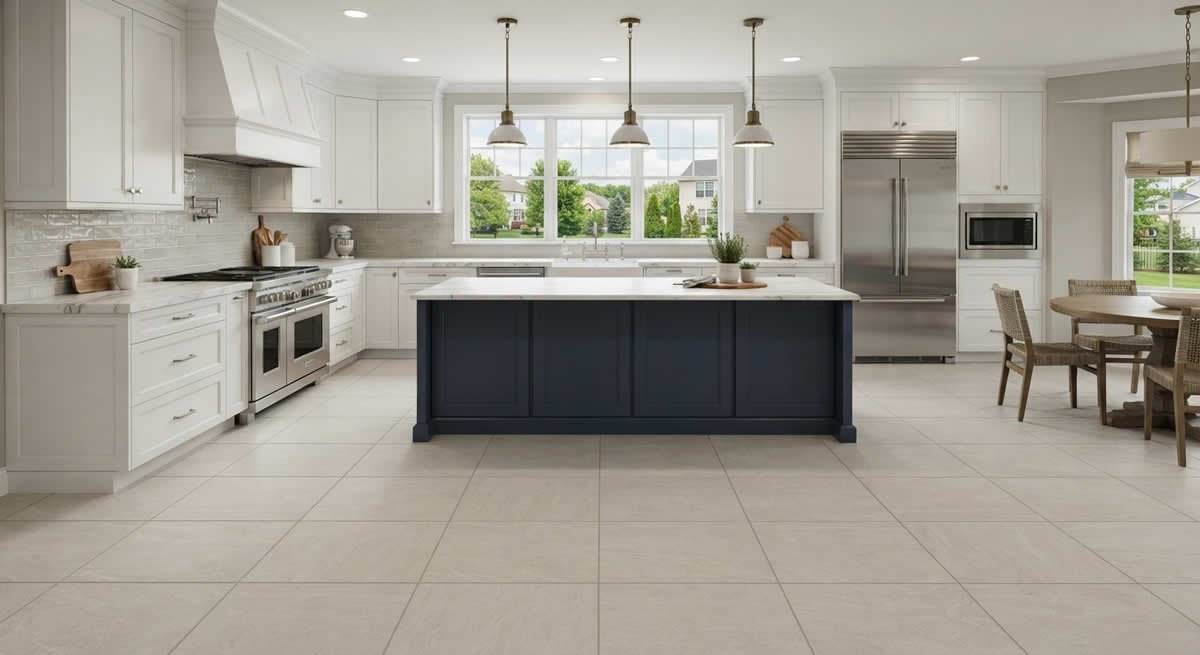
Precision tile flooring installation with straight grout lines in Morris County, NJ.
This guide explains where tile works best, how to choose the right material, why preparation determines success and what to expect from a professional installation.
Where Tile Flooring Works Best
Tile is a smart choice anywhere you need durability, easy cleaning and moisture resistance. The most common applications include:
- Kitchens: tile handles spills, dropped items and constant traffic. It pairs well with custom countertops and backsplashes for a cohesive look.
- Bathrooms: floors, shower walls and tub surrounds all benefit from tile when it is properly waterproofed. Complete the space with custom glass shower doors and see our bathroom remodeling services.
- Entryways and mudrooms: these areas see dirt, snow, salt and water, and tile cleans up easily.
- Laundry rooms: resistance to leaks and humidity makes tile a practical solution.
- Basements: tile does not absorb moisture and works well on concrete slabs when properly prepared. See our basement remodeling page.
- Sunrooms and living areas: large-format tile creates a clean, continuous look that makes rooms feel bigger.
Choosing the Right Tile Material
Ceramic Tile
Ceramic is versatile and budget-friendly, available in an enormous range of colors, patterns and finishes. It works well for walls and for floors in moderate-traffic areas. It is generally less dense than porcelain, so check the manufacturer’s rating for floor use.
Porcelain Tile
Porcelain is denser, harder and more water resistant than standard ceramic, which makes it an excellent choice for floors, showers, entries and high-traffic zones. Modern porcelain can convincingly imitate wood, concrete and natural stone, so you can get the look you want with lower maintenance.
Natural Stone Tile
Marble, travertine, slate, limestone and granite offer unique veining, color variation and an upscale look. Natural stone typically requires sealing and more careful maintenance, and some types are softer or more porous than porcelain. It is a beautiful option when you understand and accept the care requirements.
Tile Size, Shape and Pattern
- Large-format tile: fewer grout lines and a modern look, but it demands flatter floors and more careful installation.
- Standard squares and rectangles: flexible and cost-effective.
- Subway and plank tile: popular in running bond, herringbone and offset patterns.
- Mosaics and hex tile: excellent for accent areas, shower floors and detailed designs.
Why Preparation Decides How Long Tile Lasts
Most tile failures begin below the surface. Tile and grout are rigid, so any movement, flex or moisture problem in the floor underneath eventually shows up as cracks, loose tiles or grout failure. Quality installation depends on getting the foundation right:
- Subfloor inspection: checking for soft spots, deflection, water damage and structural problems.
- Proper substrate: using underlayment suitable for tile, such as cement backer board or an approved uncoupling membrane, depending on the situation.
- Perfect leveling: grinding high spots and filling low spots so tiles sit flat, especially for large-format products.
- Waterproofing where needed: membranes and sealing systems in showers, wet rooms and other moisture-prone zones.
- Layout planning: starting from a visually logical point so cuts are balanced and the pattern looks intentional.
- Correct mortar and coverage: using the right thin-set for the tile and achieving full contact beneath each piece.
- Movement joints: allowing for expansion and contraction in larger areas and at perimeters.
Grout, Sealing and Finishing
Grout lines do more than fill the spaces between tiles. They influence how the floor looks and how well it resists staining. We ensure straight, consistent joints and select grout appropriate to the tile and the room.
- Cement-based grout: common and versatile, and it generally needs sealing.
- Epoxy grout: highly stain resistant and durable, suited to demanding areas.
- Grout color: matching grout creates a seamless surface while contrasting grout emphasizes the pattern.
- Sealing: where appropriate, sealing natural stone, porous tile and grout protects against water infiltration and staining.
- Transitions: clean thresholds where tile meets other flooring, such as hardwood or luxury vinyl.
Safety, Comfort and Practical Considerations
- Slip resistance: choose textured or rated tiles for bathrooms, entries and any area that gets wet. Polished tile can be slippery when wet.
- Comfort underfoot: tile is hard and can feel cold. Radiant floor heating systems can make tile floors warm and comfortable in winter, and they are a popular upgrade in bathrooms and kitchens.
- Noise and fatigue: area rugs or anti-fatigue mats can help in kitchens where you stand frequently.
- Maintenance: regular sweeping and mopping with a pH-appropriate cleaner keep tile and grout looking fresh.
- Spare tile: keep extra tiles from your lot in case a future repair is needed, since dye lots can vary.
Our Tile Flooring Installation Process
- Free consultation and estimate: we visit your home, measure the space, evaluate the subfloor and discuss your design goals and budget.
- Material and layout selection: we help you choose tile, grout and patterns that suit your style and the demands of each room.
- Demolition and preparation: existing flooring is removed, the substrate is repaired and the floor is leveled.
- Installation: tile is set with consistent spacing, precise cuts and attention to alignment.
- Grouting and sealing: joints are filled, cleaned and sealed as appropriate.
- Finishing and final walkthrough: baseboards, transitions and cleanup are completed and we review the work with you.
Tile Flooring in New Jersey Homes: What to Know
Older homes in New Jersey often have subfloors that have moved over time, and they may need leveling or reinforcement before tile can be installed. Basements and slab floors can hold moisture, so testing and preparation are important. Seasonal temperature and humidity swings cause houses to move slightly, which is why correct substrates, movement joints and flexible sealants matter.
Larger remodels that involve plumbing changes or structural work may require permits and inspections through your local construction office. Requirements vary by town. New Jersey also requires home improvement contractors to be registered with the state, so always verify registration and insurance before hiring. We are fully insured and glad to help you understand what your project involves.
Tile Flooring Across Morris County and Northern NJ
We install tile flooring in Boonton, Chatham, Chester, Denville, East Hanover, Hanover, Harding, Jefferson, Long Hill, Mendham, Mine Hill, Montville, Morris, Mount Olive, Parsippany-Troy Hills, Pequannock, Randolph, Rockaway, Roxbury and Washington Township, along with communities in Bergen and Sussex counties. Roxbury and Washington Township homeowners frequently request custom tile work paired with exterior improvements. See our areas we serve, or visit Morris County, Bergen County and Sussex County.
Why Choose Joe’s Construction & Remodeling, LLC?
- Fully insured for your protection.
- Free, transparent estimates with no hidden fees.
- Reasonable rates without compromising material quality.
- All major credit cards accepted.
- Bilingual service in English and Spanish. ¡Hablamos español!
Frequently Asked Questions About Tile Flooring
Is porcelain or ceramic better for floors?
Porcelain is generally denser and more water resistant, making it a strong choice for floors and wet areas. Ceramic works well in many applications too, so check the product rating for floor use.
Can you install tile over my existing floor?
Sometimes, but it depends on the existing surface, its condition and height requirements. We evaluate it on site and recommend whether to remove it.
How long does tile installation take?
It depends on the size of the area, the tile and the amount of preparation. Mortar and grout also need curing time before the floor is ready for regular use. We give you a realistic timeline after your consultation.
Does tile need to be sealed?
Natural stone and some grout types usually need sealing, while many porcelain tiles do not. We advise on what your materials require.
Can I add heated floors?
In many cases, yes. Radiant heating systems can be installed beneath tile. Discuss this early so planning and electrical needs are addressed before installation.
Request Your Free Tile Flooring Estimate
Ready for floors that are beautiful, durable and built to last? Contact Joe’s Construction & Remodeling, LLC at 973-876-7130 or 973-580-5598, or request your free quote online. Browse all of our construction and remodeling services to plan your next project.