

Blog Home Remodeling New Jersey
Can You Still Do Exterior Work in Winter in NJ? What to Do Now vs. in Spring

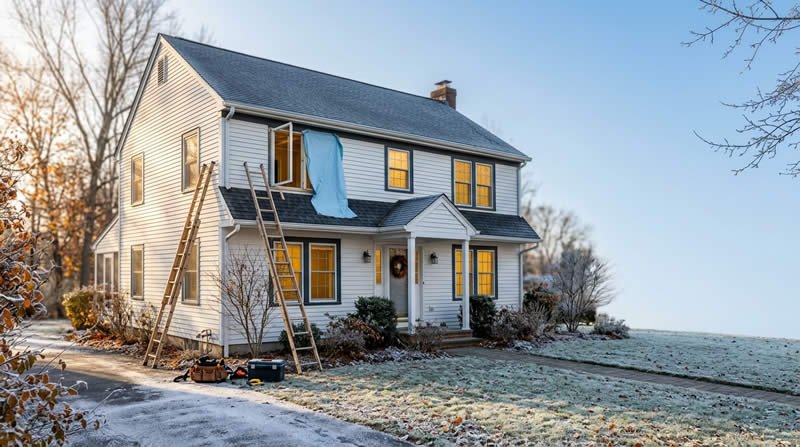
Most homeowners in Northern New Jersey assume exterior work shuts down the moment temperatures drop. That isn’t quite true, and acting on the assumption can cost you a whole season. Some jobs run fine in the cold with the right precautions. Others can be damaged by freezing in ways that only show up months later, when the thaw arrives. The difference comes down to what each material needs in order to cure, seal or settle.
If you are deciding whether to start an exterior project now or wait for spring, this article separates the two groups and explains the reasoning behind each, so you can judge a contractor’s answer instead of just accepting it.
Which exterior projects can continue in an NJ winter?
Short answer: window and door replacement, deck framing and structural repairs can usually continue through winter when the crew works in stages and protects the openings. Masonry, concrete, paving and exterior painting are the most sensitive to freezing and are normally better scheduled for spring. The deciding factor is the minimum temperature each material requires, not the calendar.
That is a rule of thumb, not a guarantee. A mild week in December can give you a workable stretch of days, and an early hard freeze can close one. A good contractor reads the forecast job by job, which is why the rest of this article focuses on how each material behaves in the cold.
What cold weather does to common exterior materials
Concrete, mortar and stonework
Concrete and mortar harden through a chemical reaction that needs both warmth and moisture. If the water in a fresh mix freezes before the material has gained enough strength, the structure can be weakened. The damage often isn’t visible on day one. It appears in spring as cracking, flaking or loose joints.
Cold-weather methods exist: heated water, insulating blankets, temporary enclosures, additives that speed up setting. They work, but they add labor and still leave some risk when overnight temperatures swing hard. As a general reference, concrete guidance starts treating conditions as “cold weather” when the air temperature is at or below about 40°F and expected to stay low. New steps, landings, patios and walkways sit squarely in that risk group, which is why many crews schedule masonry and paving work for warmer months unless the forecast cooperates.
Paving and frozen ground
Asphalt has to be compacted while it is still hot, and in cold air it cools before the roller can finish the job. Many asphalt plants also slow down or close for the winter. Paver patios and driveways have a different problem: the gravel base underneath has to be compacted properly, and that’s not possible on frozen soil. A base laid over frozen ground can settle unevenly once it thaws, and the surface follows it.
Paint, stain and sealants
Every exterior coating and sealant lists a minimum application temperature on its label, and the surface has to be dry. Those limits are usually higher than people expect. In a typical New Jersey December, painting or staining outside is rarely realistic. Low-temperature caulks and sealants exist for specific uses, so ask the contractor which product they plan to use and what its label says.
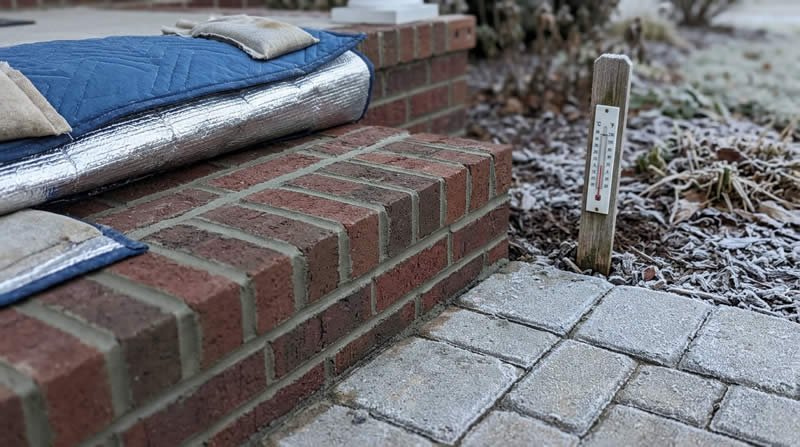
Fresh mortar and concrete need protection when temperatures approach freezing.
Projects that can keep moving in winter
Window and door replacement
Replacing windows in cold weather is common. The usual approach is to work one opening at a time, so the house is exposed for a short window rather than all at once. Insulating foam, sealants and flashing tapes also have temperature ranges, so the crew needs products suited to the conditions. If you’re considering this, the details of windows and doors replacement matter more in winter than in summer: how long each opening stays unsealed, how the work is staged and what happens if the weather turns mid-day.
Deck framing and rebuilds
Framing doesn’t depend on curing, so a crew can often build or rebuild a deck structure in cold weather. The exception is new footings. Digging in frozen ground is harder, and poured concrete footings bring back the freezing problem described above. Material choice matters too. Composite boards expand and contract with temperature, and manufacturers specify gaps based on the temperature during installation, so a winter install needs different spacing than a summer one. Pressure-treated lumber, which is often wet when installed, will shrink as it dries in the following months. If you’re planning a new structure, our overview of deck building explains how those choices fit together.
Repairs, demolition and preparation
Removing rotted railings, replacing damaged trim, opening up a section to inspect what’s underneath, taking measurements: all of that can happen in winter, and it often makes sense to do it now so that nothing is a surprise when the full project starts.
Projects that usually wait for spring
| Project | Winter outlook | Main reason |
|---|---|---|
| New concrete steps, patios, walkways | Usually wait | Fresh concrete can be damaged by freezing; ground may be frozen |
| Asphalt or paver driveways | Usually wait | Compaction problems and frozen base |
| Brick and stone work, repointing | Depends on the weather | Mortar has to cure above freezing temperatures |
| Exterior painting and staining | Usually wait | Label minimum temperatures and surface moisture |
| Window and door replacement | Often possible | Done in stages; sealants have temperature limits |
| Deck framing and repairs | Often possible | Footings need workable ground |
| Porch and step repairs | Depends on the repair | Wood repairs can proceed; masonry repairs usually wait |
“Depends on the weather” is an honest answer, not a dodge. A contractor who promises a masonry schedule in January without mentioning temperature is either working in ideal conditions or not thinking about it. For porch work in particular, see how porch and steps projects are approached in each material.
Use the cold months to lock in your spring start
Winter is when spring schedules get built. Several things can happen now without any weather risk:
- Site visit and measurements. Seeing the house in winter also shows problems that summer hides, such as ice dams, drainage failures and drafty openings.
- Design and material decisions. Custom windows, stone and some decking products can have long lead times, and ordering early avoids a gap in the schedule.
- Permits. Many structural exterior projects, such as new decks or porches, require a permit from your municipal construction office. Requirements and processing times vary by town, so confirm with your own office. Getting paperwork moving in winter means work can start as soon as the weather allows.
- Booking your date. Spring slots tend to fill early, and an estimate now often means a firmer start date later.
For a broader checklist of what to finish before the cold sets in, see our guide to exterior home improvement projects before winter in NJ.
If the exterior has to wait, the interior doesn’t
Weather has no effect on what happens inside your house. If an outdoor project is on hold, winter is a practical time to move an indoor one forward. Basements are a common choice, since framing, electrical, insulation and finishes can all proceed regardless of the forecast. You can read more in our guide to basement finishing services in NJ.
Questions to ask any contractor about winter work
- What is the minimum temperature for the materials you plan to use, and what happens to the schedule if the forecast drops below it?
- How will you protect openings, fresh masonry or exposed framing overnight?
- Who applies for the permit, and when are inspections expected?
- If weather stops the job, how will you communicate the new timeline?
- Is any part of this project better started in spring, and why?
The last question is the most revealing. A contractor who recommends waiting on part of the job is usually protecting the result, not avoiding work.
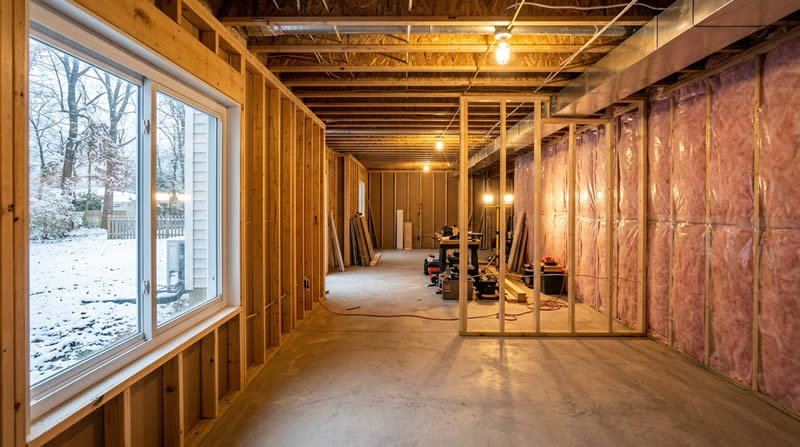
When outdoor work has to wait, interior projects keep moving.
Frequently asked questions
Can you do exterior work in New Jersey during winter?
Yes, some of it. Window and door replacement, deck framing and many repairs can proceed with precautions. Concrete, paving, masonry and exterior painting are far more sensitive to freezing and are normally better scheduled for spring, unless there is a stretch of mild weather.
Can concrete be poured in winter in NJ?
It can be done with cold-weather measures such as heated materials and insulating covers, but the risk of freeze damage is higher and results depend on the temperature during the first days after pouring. For non-urgent projects like patios and walkways, waiting for spring is usually the safer choice.
Is winter a good time to replace windows?
It can be, provided the crew works one opening at a time and uses sealants and foams rated for the temperature. Interior comfort is the main trade-off, since each opening is briefly unsealed. Ask how the crew handles that before you sign.
Can I build a deck in winter?
Framing can often proceed, but new footings depend on the ground not being frozen. Composite decking also needs gaps spaced for the installation temperature. Many homeowners use winter for design, permits and ordering, and start building as soon as conditions allow.
Do I need a permit for exterior work in winter?
Season doesn’t change permit rules. Structural projects such as new decks, porches and some window or door changes may require a permit from your local construction office, and requirements vary by municipality. Confirm with your town before work begins.
Can I get an estimate now for a spring project?
Yes, and it is a good idea. An estimate in winter gives time for measurements, material selection and permits, and makes it easier to reserve a spring start date.
Plan your next step with a local team
Joe’s Construction & Remodeling LLC works with homeowners across Morris, Sussex and Bergen counties from its office in Dover, New Jersey. You can see where we work on our areas we serve page, or go straight to the free quote request if you already know what you need.
Contact us
- Phone: 973-876-7130
- Answering machine: 973-580-5598
- Address: 3 James St, Dover, NJ 07801
- Google Business Profile: view our profile
¡Hablamos español! Si prefiere que le atendamos en español para su proyecto de exteriores o de interiores, llámenos al 973-876-7130.